Photo: Electreck
Contact: Larissa Milo-Dale
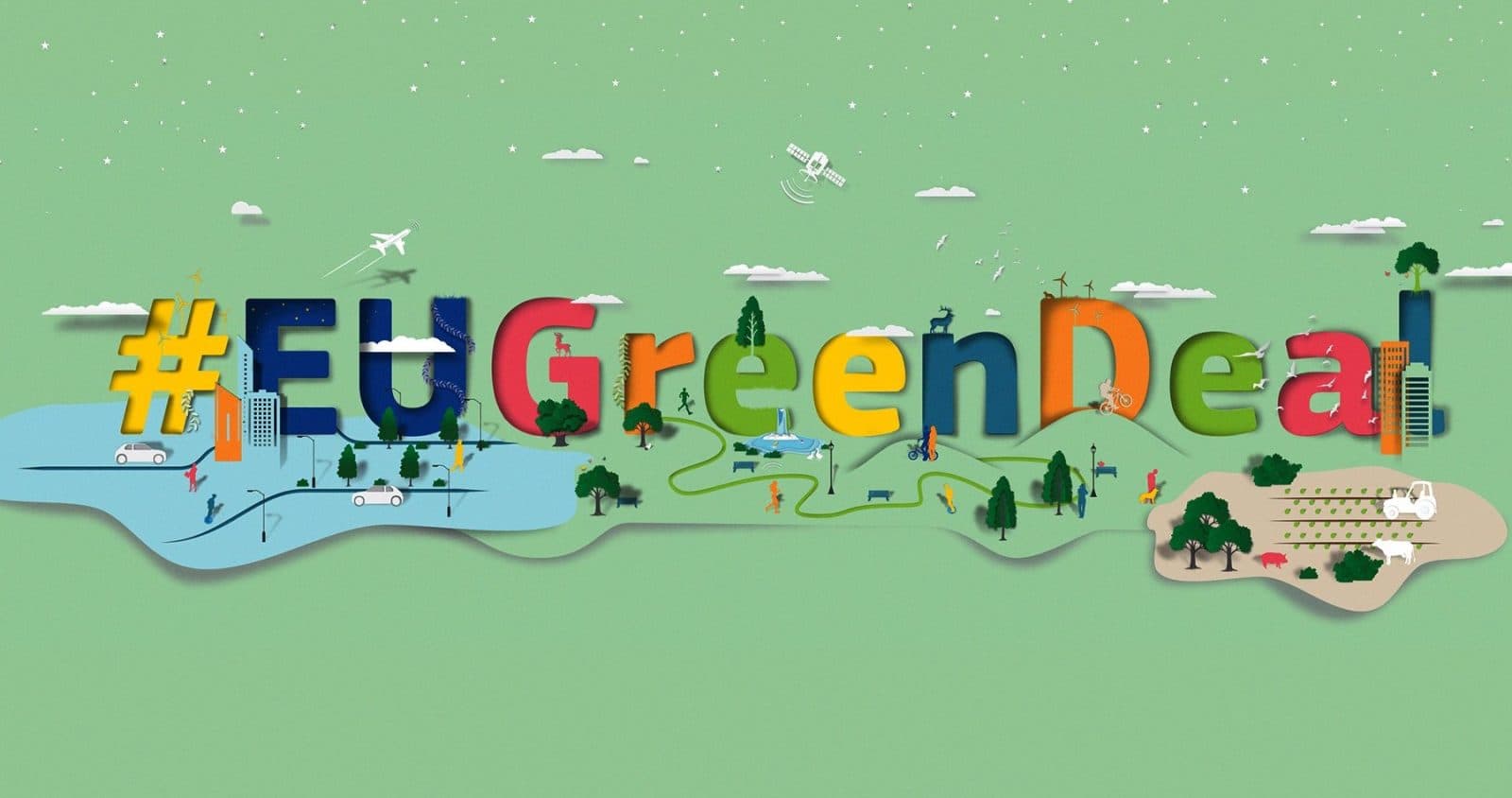
On 16 July 2019, European Commission President Ursula von der Leyen presented the Political Guidelines for 2019-2024, highlighting six key ambitions for Europe. The first of these was to deliver a ‘European Green Deal’ within the first 100 days.
Five months later, the Commission published its Communication on the European Green Deal, recognizing the environmental challenges confronting the world and providing new impetus for action. While WWF welcomed the proposed package as comprehensive, we were critical of the Commission’s thinking as too conservative, missing an opportunity to challenge the traditional growth paradigm in favour of a new approach that would respect planetary boundaries.
Happily, in January 2020, with a large majority and cross-party support, the European Parliament delivered an extraordinary boost, calling on the Commission to go beyond the commitments set out in its guidelines. In particular, WWF welcomed Parliament’s calls for:
- Ambitious and enforceable legal measures and binding targets on protection and restoration in the 2030 Biodiversity Strategy;
- A legal framework to ensure deforestation-free supply chains for products placed on the EU market (a law that WWF has long called for);
- Full alignment of the current Common Agricultural Policy (CAP) reform proposals with the EU’s increased environmental, climate, and biodiversity commitments set out in the European Green Deal; and
- Infringement procedures against Member States which fail to respect EU nature laws.
According to Ester Asin, Director of the WWF European Policy Office, “The ball is now in the court of Member States, who must unequivocally endorse ambitious action. Only then can Europe’s ‘man on the moon’ moment become reality.”
Despite the European Green Deal’s strong start in 2020, a WWF stock taking in March of the Commission’s first 100 days found that the environment and climate measures rolled out thus far did not meet the rhetoric. Since then, as a result of the deepening Covid-19 crisis, the work of the European institutions and all related organizations is increasingly affected. This means that some key initiatives, such as the EU Biodiversity Strategy and the EU Farm to Fork Strategy, have been delayed.
WWF is working to ensure that the European Green Deal is used as the guiding principle for all efforts to help economic recovery. WWF joined with seven leading environmental NGOs to issue a letter to the European Commission, Parliament and Council, calling on them to ensure that future economic stimulus plans are fully aligned with the objectives of the European Green Deal, and to help accelerate Europe’s transition to a just and sustainable economy. On 7 April, we also issued a briefing paper entitled Building Resilience: WWF Recommendations for a Just and Sustainable Recovery After Covid-19, which lays out the details and principles for economic recovery packages.
There is a growing momentum in support of a ‘green recovery’, backed by EU governments, scientists, corporate CEOs, think tanks and policy makers. Based on the briefing paper, the group of NGOs, have reached (as of 4 May) over 185,000 signatures from civil society to support a just and green recovery for Europe. The coming weeks will see the discussions around Europe’s economic recovery intensify in all EU institutions. WWF will be following this every step of the way to make sure that instead of ‘bouncing back’ to business as usual, Europe will ‘bounce forward’ on the path to a just and sustainable transition after this crisis.
This article is part of the WWF Baltic Newsletter – May 2020