

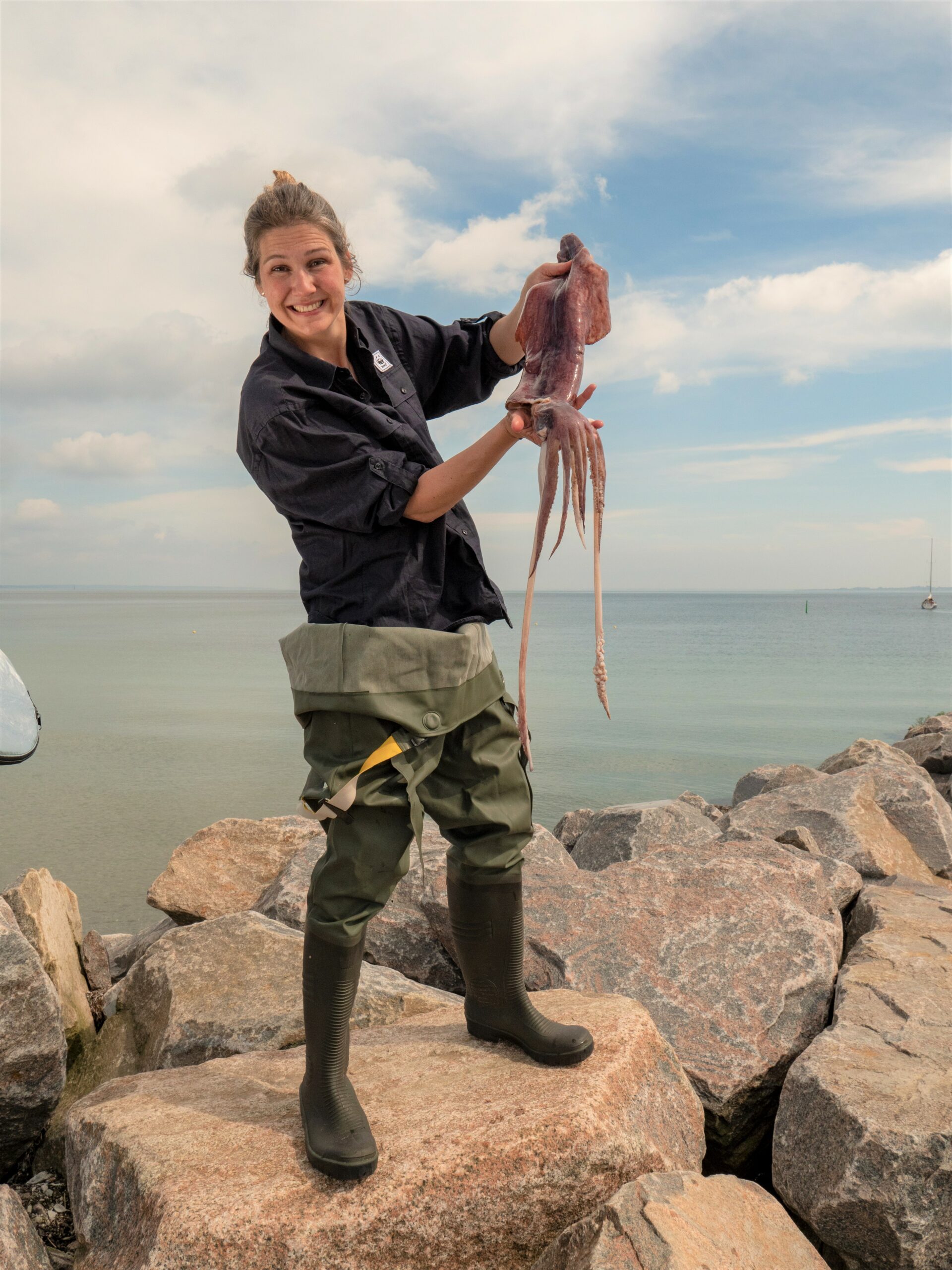
Photo: WWF Denmark
Contact: Henrike Semmler
What is your job title?
Senior Advisor for Ocean & Fisheries
What is a typical day’s work for you?
A lot of meetings (currently even more Zoom meetings) – with panda-colleagues within our European network, but also with respective agencies for environment and fisheries, government spokesmen for fisheries and environment at the Parliament, and relevant stakeholders. And in between all that I am working together with my colleagues on policy papers, marine rewilding projects and the WWF seafood guide.
What path did you take to get here?
I have a Masters in Biology and did a PhD in Marine biology. Then I had a postdoc at the university, looking at small marine critters (invertebrates). I worked at the International Council for Exploration of the Sea (ICES), that gives among other things advice on fisheries quotas to the European Commission. Followed by 3 years as a policy advisor of the Environmental NGO Oceana. Since 2.5 yrs I am working at WWF.
What do your kids think you do?
My son Wito, 9 years old: “You are a marine biologist, who works on all kinds of problems the oceans face. Currently you work on a project that is about 3D reefs, which is cool but also strange, because it is artificial but helps the fish. WWF has a beautiful panda logo. I think it’s a cool job and you have cool colleagues. And well, cool but sometimes strange projects.”
What is the most important thing you are trying to achieve right now?
On a very basic level, that people in Denmark are aware of the bad state of the sea, its need for protection and their impact on the ocean. On a political level, that politicians are willing to introduce some critical change on how we manage our seas.
What is the most challenging thing about your work?
Science documents that the status of our ocean is devastating, progress in marine conservation feels slow, so time is of the essence. Which makes me wonder if my effort is sufficient.
- Partner: WWF Denmark
- Country: Denmark
- Active in the Baltic since 2015
- Main thematic focus: Fisheries and Marine Protection Areas in the North Sea and Baltic Sea ecoregions
This article is part of the WWF Baltic Newsletter – May 2021
