
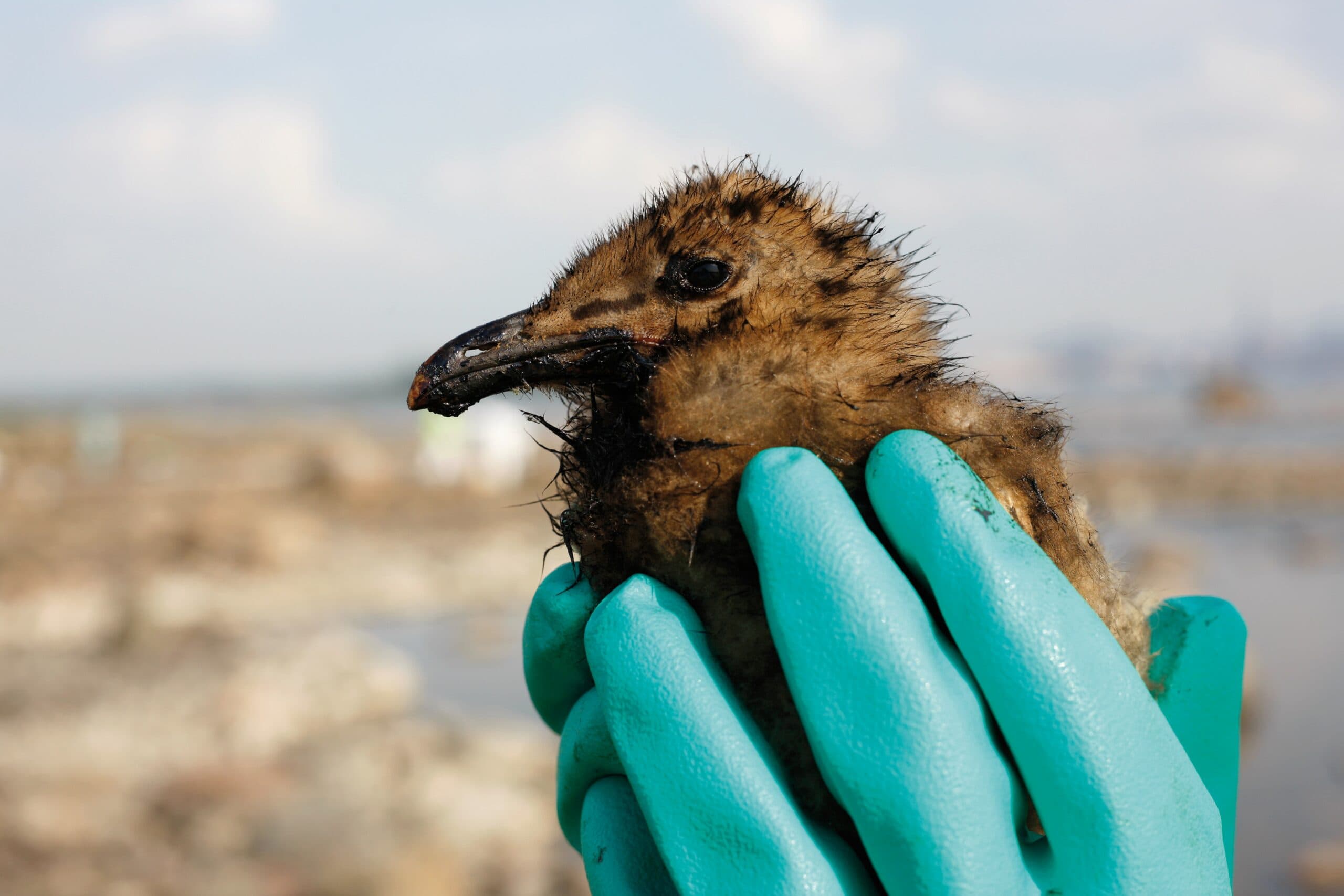
Oiled bird found after an oil spill in Raahe, Finland in 2014.
Photo: Markus Dernjatin/WWF
Contact Vanessa Ryan
Oil spills are rare events but they can lead to significant environmental damage. If the oil contaminates sensitive areas, hundreds or even thousands of seabirds may be affected. A solid system is then required to effectively deal with these oiled birds. Per the HELCOM regional action plan, Baltic Sea countries must develop wildlife response plans that are integrated into oil pollution contingency plans. However, several countries in the region lack adequate resources or capacity to deal with a large-scale wildlife incident.
WWF Finland is a partner in the European Oiled Wildlife Assistance (EUROWA-2) project which kicked off in January 2021. The two-year project focuses on developing oiled wildlife response preparedness in Europe and is co-funded by the European Commission’s Civil Protection Financial Instrument.
For many years, WWF Finland has been actively involved in oiled wildlife response and shoreline clean-up activities. Since 2003, we have coordinated and trained members of our voluntary oil spill response troops for these purposes. Being members of the EUROWA network pursuing a system where European resources and expertise can easily be incorporated into our national response system is an essential and integral part of developing our national oiled wildlife response capability.
EUROWA-2 will deliver training events for volunteers and specialists, and enhance cooperation with authorities responsible for oil spill response by organizing workshops and consultations. It will also develop training and exercise packages and guidelines, strengthen collaboration within the EUROWA network and promote the work being done, both at events and via social media. The lead partner is Sea Alarm (Belgium), who will collaborate with Submon (Spain) and Royal NIOZ (the Netherlands).
This article is part of the WWF Baltic Newsletter – May 2021


