
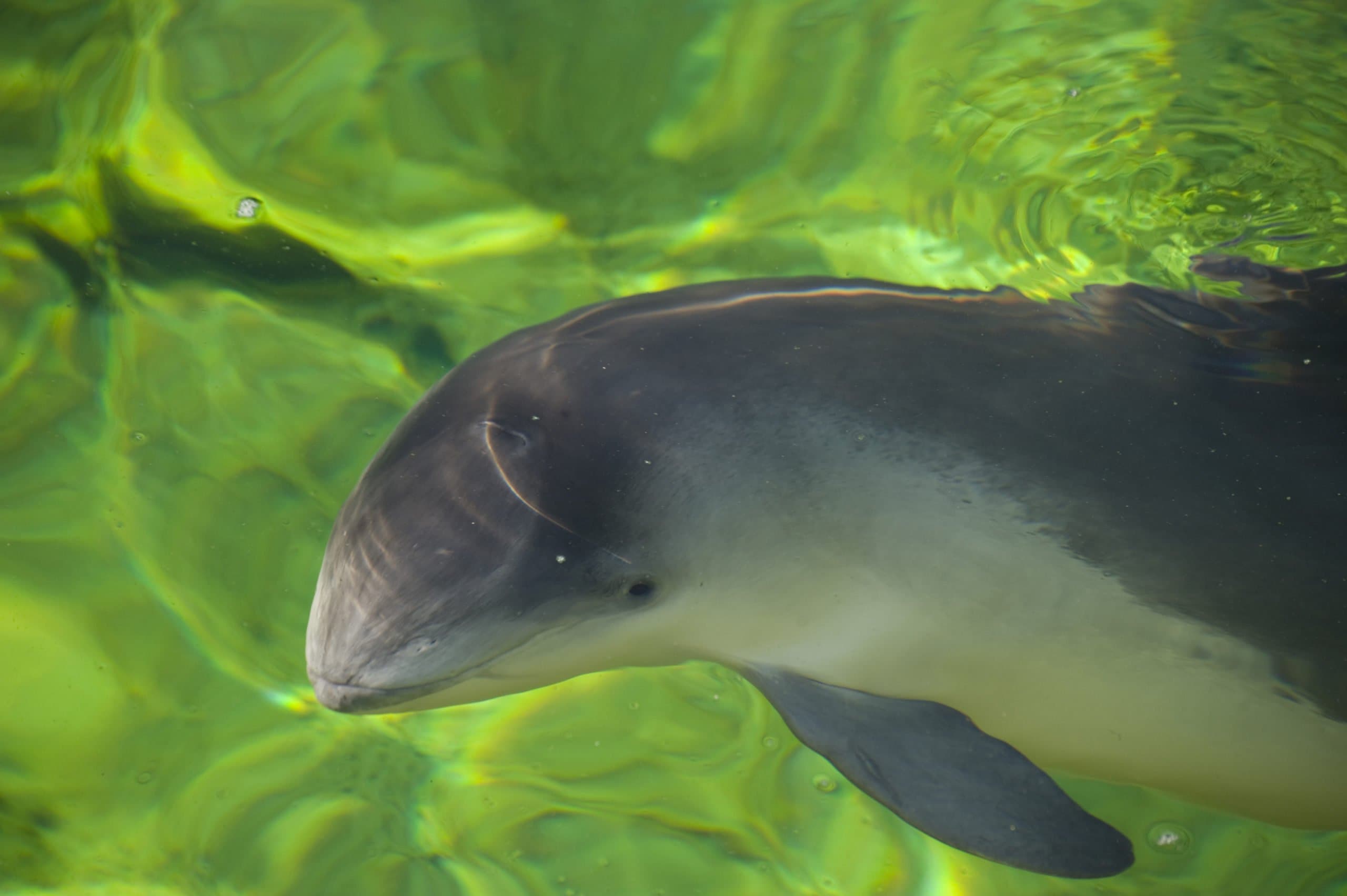
Harbour porpoise (Phocoena phocoena). Photo: Shutterstock / Jan Zoetekouw / WWF
Contact: Stina Nyström
Bycatch is the biggest threat globally to whales, dolphins, and porpoises. In the Baltic Sea proper, with only a few hundred harbour porpoises left, a single incidental bycatch could have a devastating impact on the ability of the population to recover.
Yet many EU Member States have failed both to implement and enforce a general system of measures to reduce bycatch and manage cetaceans’ Natura 2000 sites to make them safe spaces. Last year, WWF supported a joint NGO legal complaint, with over 20 NGOs represented, against 15 EU Member States for lack of compliance with the regulation of cetaceans bycatch. In parallel, the NGO coalition called on the European Commission to adopt emergency measures to immediately stop the unacceptable levels of bycatch of the common dolphin population in the Bay of Biscay and eliminate the risk of bycatch of the critically endangered Baltic Sea harbour porpoise.
Happily, things seem to be moving in the cetaceans’ favour. At the end of February, Virginijus Sinkevičius, European Commissioner for the Environment, Oceans and Fisheries, sent a letter to the targeted countries’ Fisheries and Environment Ministers on this matter. The letter requested them to act and enforce bycatch avoidance under the various relevant EU policies. It includes much of the content provided by NGOs. We hope that continued engagement will help deliver concrete action to protect cetaceans in all European waters!
What do we know about the Baltic harbour porpoise?
The harbour porpoise is represented by 700,000 individuals throughout its range and is doing well on a global scale. However, certain geographically defined populations or subpopulations have experienced drastic declines, such as the harbour porpoise population in the Baltic Sea.
What does a harbour porpoise look like?
The harbour porpoise (Phocoena phocoena) is a small toothed whale, growing to be about 1.5 m long and weighing around 50 kg. It resembles a dolphin but has a rounded less prominent nose and a smaller more triangular dorsal fin. Porpoises don’t jump out of the water like dolphins do, but move in a characteristic ‘tumbling’ way.
How do they live?
The harbour porpoise often lives in small groups of up to three individuals. The most common family constellation is mother and calf. From the time a young female becomes mature, she conceives a calf annually or every other year. Harbour porpoises generally eat fatty fish such as herring, sprat and small cod. They need to consume 5-10 per cent of their own body weight each day, which makes them susceptible to current reductions in prey populations.
How do they communicate?
Harbour porpoises, like all toothed whales, use acoustic signals to navigate, locate prey and communicate with one another. Echolocation allows them to ‘see’ their surroundings with sound. They emit echolocation clicks at frequencies around 130 kHz, sounds that humans can’t hear.
Quick facts
- Body length: Around 1.5m
- Weight: Around 50 kg
- Food: Small schooling fish like herring, sprat and small cod
- Lifespan: 8-12 years on average
- Reproductive maturity: 3-4 years
This article is part of the WWF Baltic Newsletter – May 2020


