

Photo: Jenny Jyrkänkallio-Mikkola
Contact: Jenny Jyrkänkallio-Mikkola
Two water protection and management sites were built in March as part of the Vesiensuojelu 4K project which is delivering tangible measures aimed at reducing nutrient load and eutrophication in Finland’s inland waterways. Both sites are located in Western Uusimaa.
The smaller site, Krabbrödjan, is 0.2 hectares and is built around a small side stream that flows into Ingå River. It starts upstream with a deeper sediment basin, which becomes a small floodplain by the streambed, and finally a small wetland area. Water levels can be regulated to reduce the amount of flow into the larger river during heavy rains or thaws and to restore water during drought. Krabbrödjan is a good example how nutrient run-off can be reduced and water managed in small side streams.
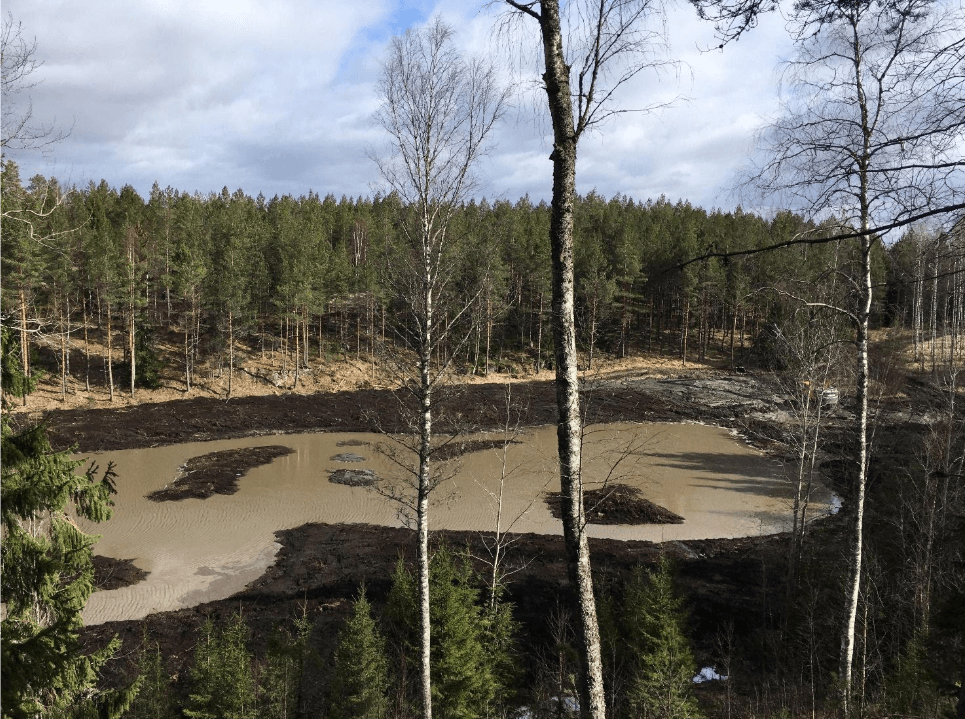
Water levels can be regulated to reduce the amount of flow into the larger river during heavy rains or thaws and to restore water during drought. Photo: Jenny Jyrkänkallio-Mikkola
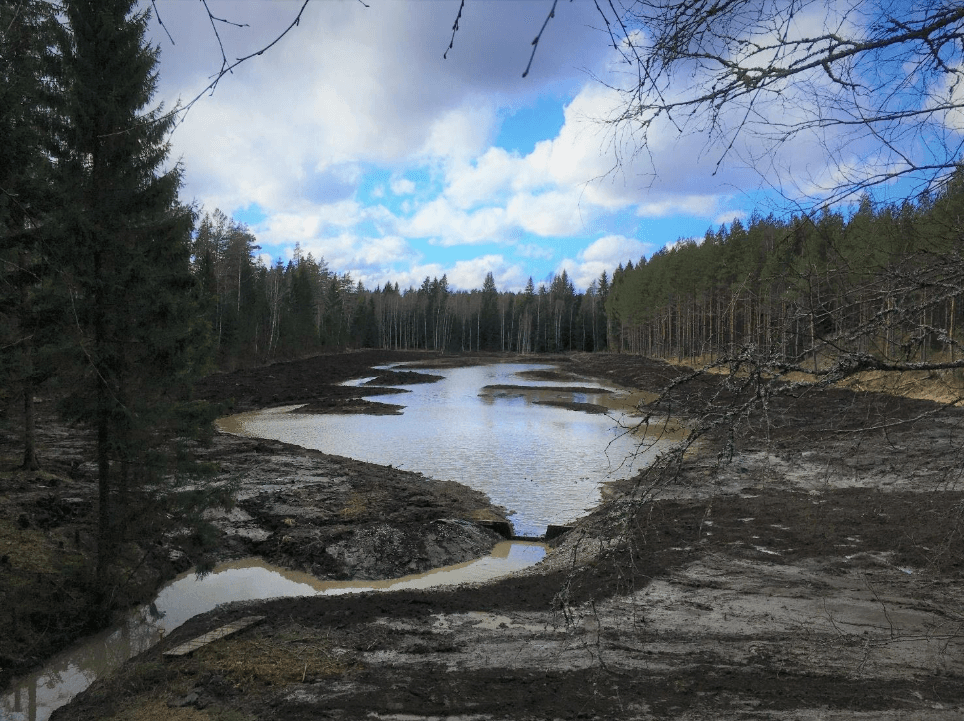
Photo: Jenny Jyrkänkallio-Mikkola
The larger site, Villmosskärr wetland, is 1 hectare, of which about half is water. It is built around a small side stream flowing into the Ingarskila River. The catchment area is used for forestry and the site is a good example how wetlands can also treat run-off from this sector. Like Krabbrödjan, Villmosskärr can also restore water, and the water level can be managed via a dam made of larch planks. Diminishing the water flowing into the larger stream during heavy rains also reduces the amount of water that floods the fields, which in turn causes large nutrient run-off.
Constructing several such sites around the catchment area will help mitigate the adverse effects of extreme weather events.
This article is part of the WWF Baltic Newsletter – May 2020

