
Contact: Viivi Kaasonen
The end of the summer was an intensive period of water protection in the Vesiensuojelu 4K project. Three water protection sites were constructed in the project area located in Western Uusimaa in August and September.
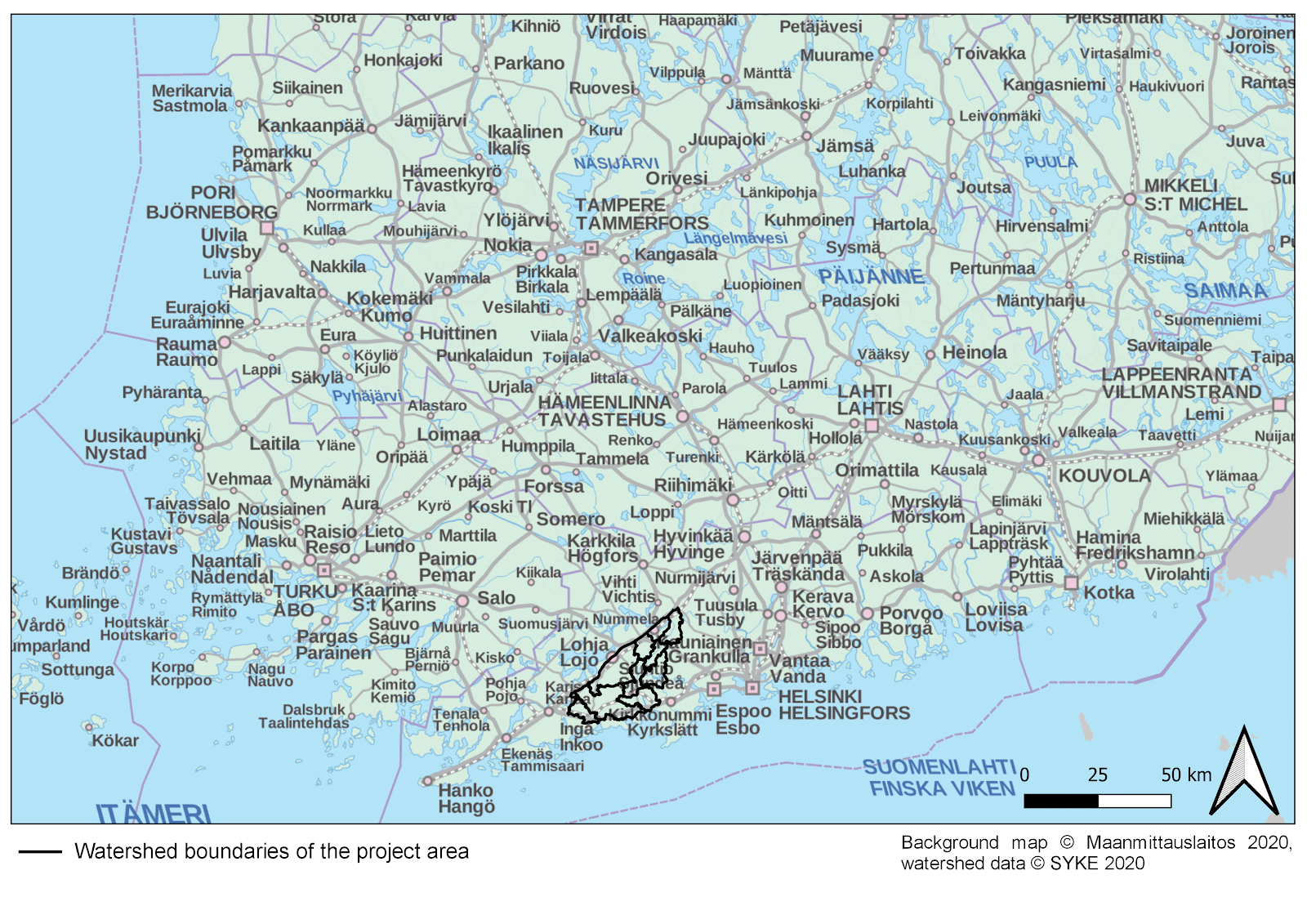
Location of the three water protection sites were constructed. © WWF Finland
The first consists of a series of submerged weirs in a side stream, Bocksbäcken, which flows into the Siuntio River. Water flow had carved a deep side stream so the banks had become steep – to the point of collapsing into the stream in some parts, eating away the surrounding farming land.
To slow the water flow and to reduce erosion, 13 submerged weirs were constructed along a 700 meter stretch. Additionally, the steepest and the collapsed parts were supported with round rocks, which help to prevent additional erosion. Submerged weirs and natural rock structures were an ideal solution for this side stream. The Siuntio River is home to a brown trout (Salmo trutta) which is endangered in Finland; the structures slow the water flow but do not block the migration of brown trout or other fish.
The second site is a combination of submerged weirs, a two-stage ditch and a small wetland-like sediment basin. These were built into a side stream of the Ingarskila River called Römossebäcken. The water management structures were built to help reduce the flooding problems experienced by the surrounding farmlands as well as to improve the local water quality. The sediment basin also supports biodiversity since wetland species can use it as a resting and feeding area.
Water management structures on the site begin upstream of the sediment basin where two submerged weirs lie. Water flows over the weirs into the wetland-like structure where the stream meets another side stream. To slow down the water flow, the structure consists of a sediment basin with two islands. From there, the two side streams continue as one into a newly built two-stage ditch, about 200 meters long. Landowners have reported that the structure has already helped to reduce flooding of the fields, which speaks to the importance of water management both for humans and nature.
This is an exemplary site for communications with ditching companies on the advantages of nature-based solutions over traditional drainage maintenance. Field drainage management is a recurring issue around which it is important to explore alternative solutions.
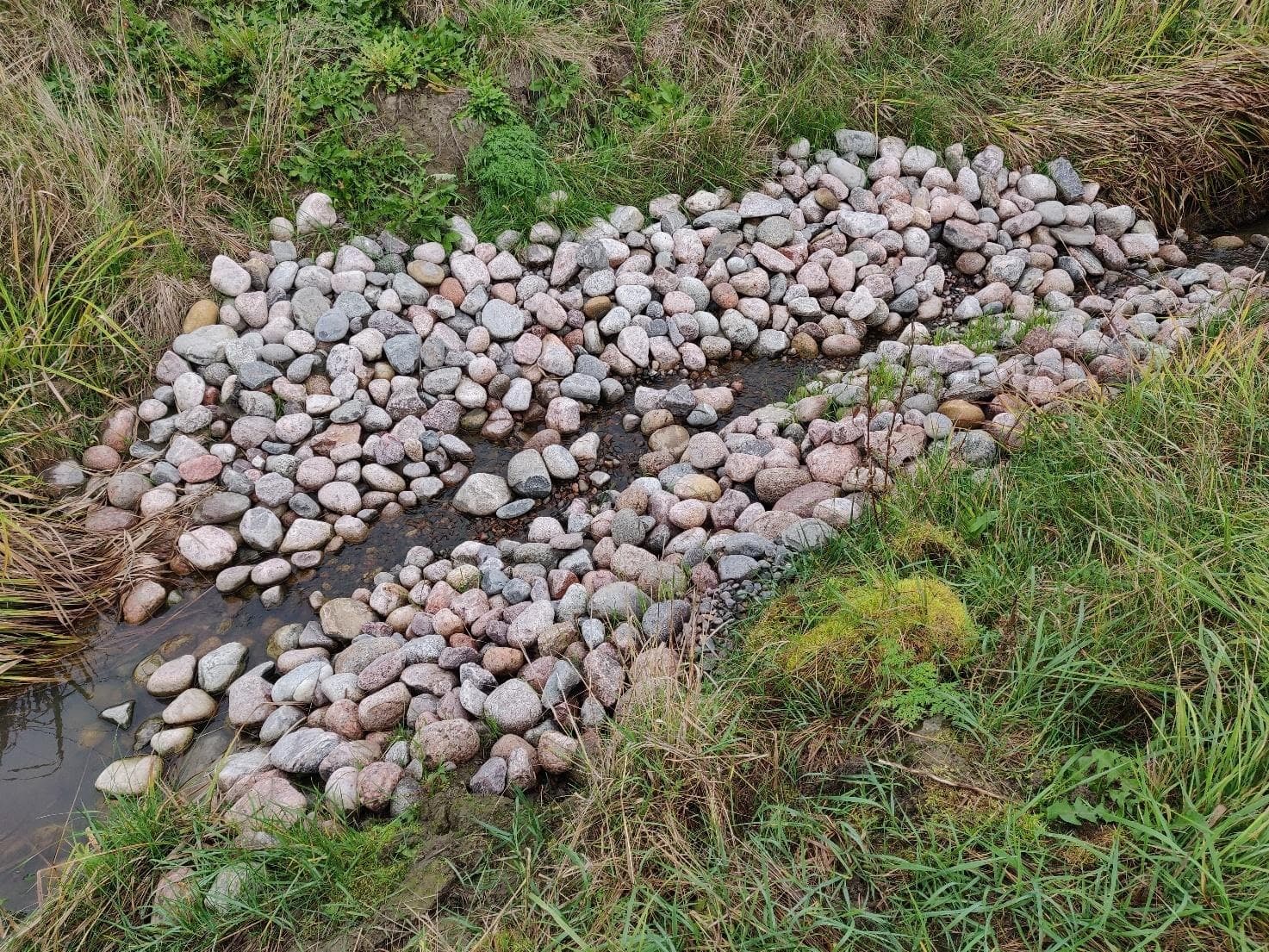
A submerged weir in Bocksbäcken. Photo: © Viivi Kaasonen
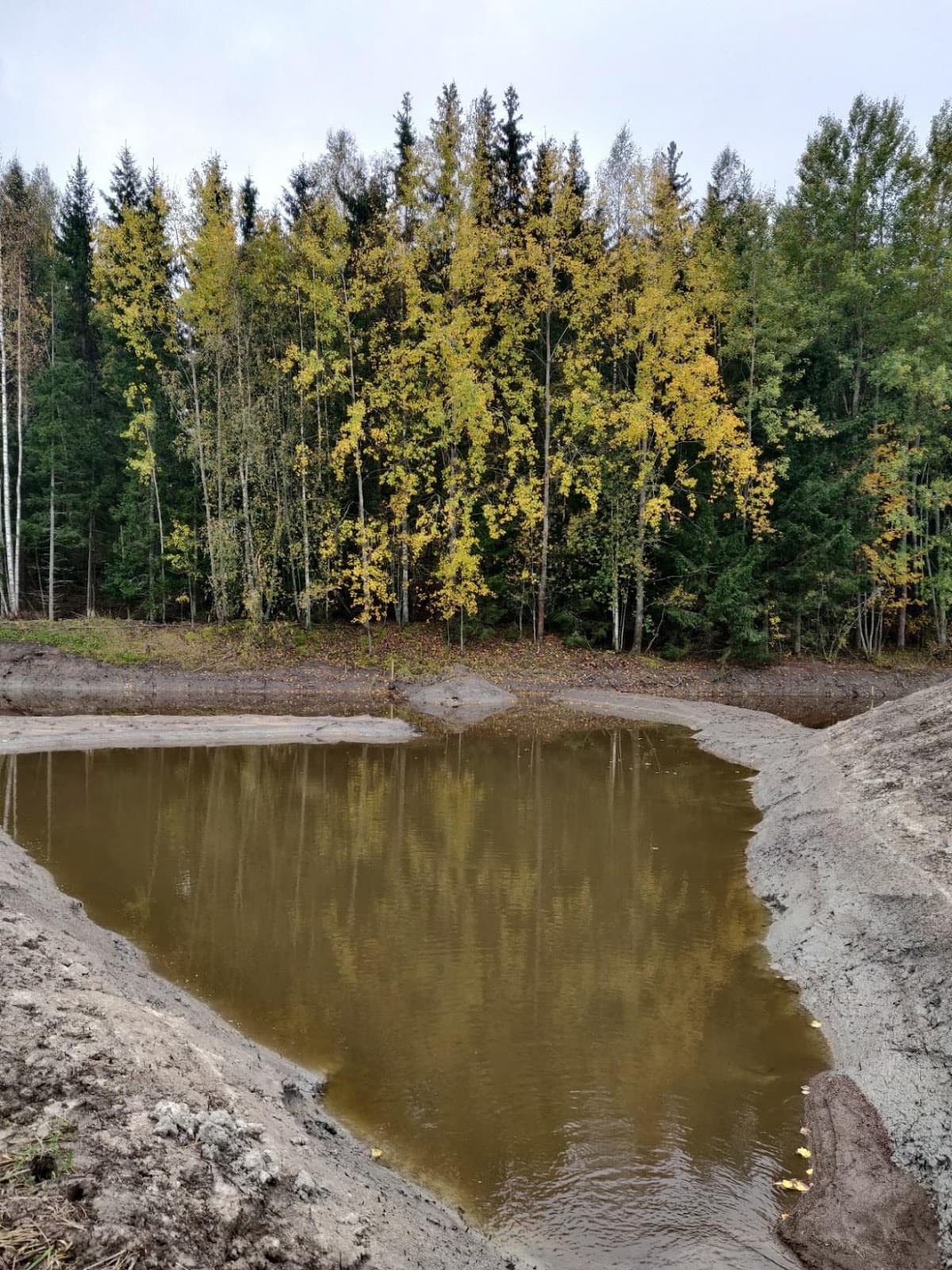
The wetland-like sediment basin of Römossebäcken. Photo: © Viivi Kaasonen

Beautiful day at Pällas wetland construction site. Location: Western Uusimaa, Finland Photo: © Viivi Kaasonen
The final water protection site built is Pällas wetland, which lies in the catchment area of the Ingarskila River. It is the largest wetland constructed in Vesiensuojelu 4K project. It covers about 2.5 hectares of which some 1.9 hectares is water. Unlike at Bocksbäcken and Römossebäcken, the catchment area of the Pällas wetland is dominated by forestry, not agriculture. The size of the wetland makes it a notable environment for wetland species. It also cleans the passing water and stores it in both the rainy and dry seasons. Water level management happens naturally via a submerged weir located at the start point of the out-flowing stream. Additionally, a flashboard riser allows the water level to be altered manually.
Like the Siuntio River, the Ingarskila is home to the endangered brown trout. So both the Römossebäcken and Pällas sites had submerged weirs which help with slowing down the water flow but allow fish to move freely in the streams. However, as Pällas wetland is at the headwaters of a side stream, fish are not likely to migrate so high up the stream. That said, we remain hesitant to build migration barriers, even though fish are less likely to swim so high up. Removing migration barriers is one of the cornerstones of our work at WWF Finland, so it would be contradictory to remove them at one place and build in another. This site is a good example of how sites located at the headwaters of streams can be built by damming, which is more cost effective than digging a similar site.
These three sites were the last ones built in the Vesiensuojelu 4K project. However, the work does not end here. VALUTA project will continue in the footsteps of this project to implement good water protection practices as well as to create an info package for actors on how to implement water protection measures after VALUTA project.
This article is part of the WWF Baltic Newsletter – December 2020

